

Major upgrade breakthrough for Red Bull as McLaren suffer MCL38 disruption


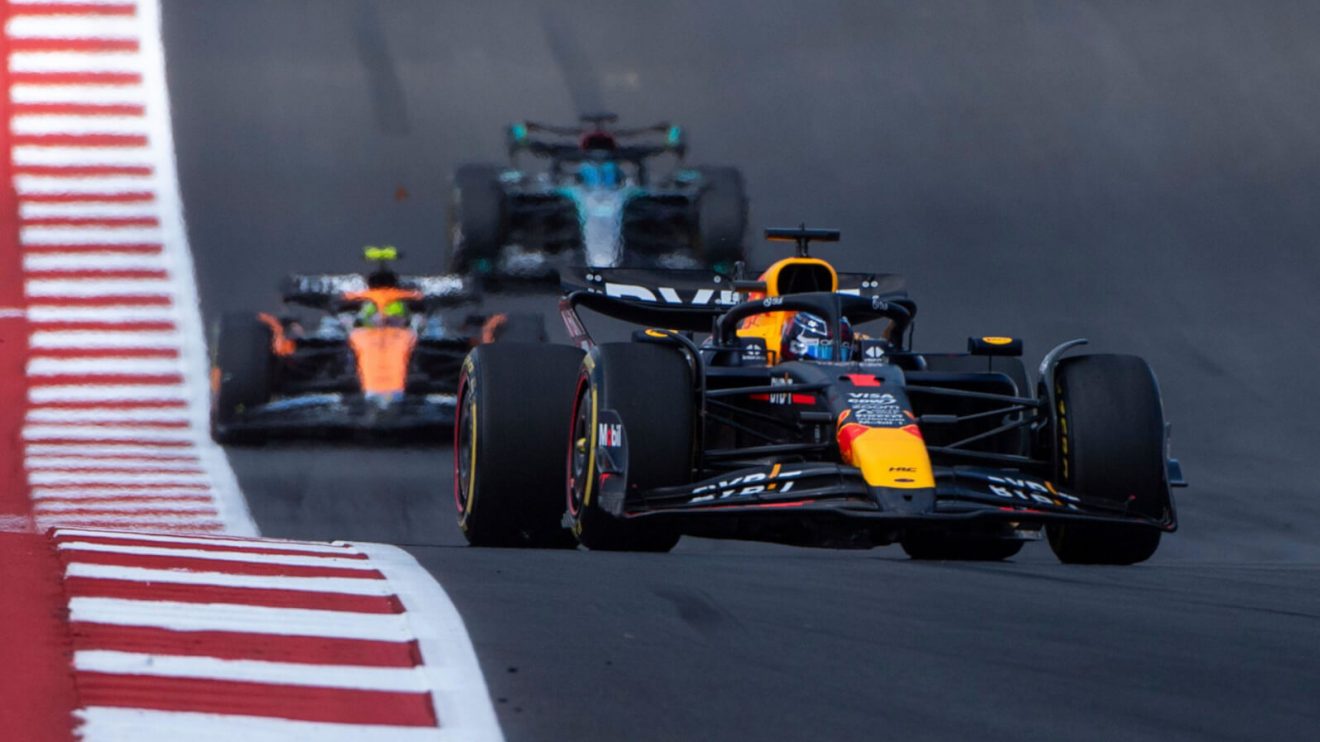
Max Verstappen leads Lando Norris in the Sprint
After a significant period this year, it seems that the Red Bull team has finally managed to extract something positive from their upgrades, and their progress is now visible on the track.
Max Verstappen has managed to extend his lead in the championship standings over Lando Norris, and it appears that the battle between these two teams off the track has had a considerable impact on their rivalry on it.
Let’s take a closer look at the upgrades both teams have brought, how they’ve adapted to them, and how these changes have influenced the competition between Verstappen and Norris.
Is Austin the right place for upgrades?
Before we dive into the upgrades themselves, it’s important to note that Austin is a challenging circuit for introducing new components for several reasons. The layout of the track in Austin is diverse, offering a bit of everything – from long straights to a mix of fast and slow corners. As a result, teams can’t focus on a single characteristic, as they can at some other circuits, but must take a more holistic approach. In other words, achieving the right balance in the car is a very demanding task.
Moreover, this was the fourth sprint weekend of the season, meaning that engineers only had one free practice session to gather data and adapt to the track.
On a circuit with a brand-new surface and a car with a lot of new parts, having just one session gives teams very little time to adjust the car. While it’s difficult to gauge the full impact of this constraint, an interesting fact is that the only top team without any upgrades, Ferrari, claimed a dominant victory on Sunday.
However, it’s likely that the schedule of upcoming races played a more significant role in deciding the timing of this new upgrade package.
United States GP: Conclusions and Driver Ratings
?US Grand Prix conclusions: Red Bull’s bibgate saga and Sergio Perez to jump?
?United States GP driver ratings: A Leclerc masterclass and more misery for Perez
Red Bull finally sees positive upgrades
Red Bull hasn’t been the dominant force they were last year – their last Formula 1 win now feels like a distant memory, dating back to Spain. However, their struggles started even before that when it became clear that McLaren had caught up in terms of on-track performance. It didn’t take long for other teams to follow suit, leaving Red Bull unable to compete for the top step of the podium for quite some time.
Looking at the team’s recent upgrades, it’s clear that the RB20 has faced serious issues with its floor and rear-end aerodynamics. In Hungary, we saw radical changes aimed at improving the car’s rear performance, especially on high-downforce tracks.
Although these upgrades didn’t significantly boost their performance, Red Bull introduced another major package in Azerbaijan with a new diffuser design resembling Ferrari’s.
Last weekend in Texas, we could once again spot changes to the car’s rear, with a redesigned geometry for the upper surface of the sidepods and the floor edges. The main purpose of these updates is to improve airflow around the diffuser, enhancing the overall floor performance.
The repositioning of the flow deflector on the rear edge of the floor now directs airflow more towards the rear suspension and diffuser to laminate the flow and increase rear stability.

Another intriguing detail can be found on the central part of the upper sidepod surface, where there is a slight depression. McLaren introduced a similar feature with their upgrade package in Miami earlier this year, which sparked a notable improvement in their performance.
While it might seem that Red Bull’s recent minor upgrades made the difference, the reality is that their strong performance in Texas is the result of months of hard work and testing various different solutions.
Red Bull has been grappling with a common issue affecting the new generation of ground-effect cars. At high speeds, the car’s floor lowers, which in turn causes the front wing – positioned closer to the ground – to generate much more downforce than usual, creating an imbalance.
This effect makes the car more sensitive and harder to handle in fast corners. Conversely, in slow corners, the issue is less pronounced, and the car’s setup window for achieving a balanced downforce on both axles is extremely narrow.
To address this, Red Bull focused on increasing rear downforce – something they clearly needed. Now that they’ve succeeded in that, it seems they have an easier task of getting the car into the optimal window to achieve the balance both the team and their drivers desire.
McLaren and their new upgrades explained
On paper, McLaren brought a longer list of upgrades, though many are difficult to spot with the naked eye. The most noticeable change is the beam wing, whose upper element is now almost in a neutral position to reduce drag and improve flow in conjunction with a higher downforce rear wing.

In addition, McLaren has redesigned the front wing and front suspension – although these changes are minimal and hard to detect. The main goal of these redesigns is to optimise airflow to the rest of the car, improving aerodynamic performance in terms of drag and downforce.
However, unlike Red Bull, McLaren’s updates didn’t seem to deliver the desired results. Before the weekend, it was expected that this type of track would suit the MCL38, and a dominant victory wouldn’t have been a surprise. However, Ferrari’s drivers quickly showed their pace during the first practice session, and this remained the case for the rest of the weekend.
It appears that the new upgrade package disrupted the balance of the MCL38, making it more sensitive to changes in track temperature, tyre conditions, and fuel load. The engineers simply couldn’t find the right solution during the one and only practice session.
With five races and two sprints left in the season, the Drivers’ Championship is still wide open. However, McLaren’s engineers will need to return the car to its familiar dominant form, and time is running out to do so.
Read next: How Verstappen and Norris telemetry data raises fresh FIA stewarding questions