
McLaren modifying rear wings following ‘mini-DRS’ controversy at Azerbaijan GP


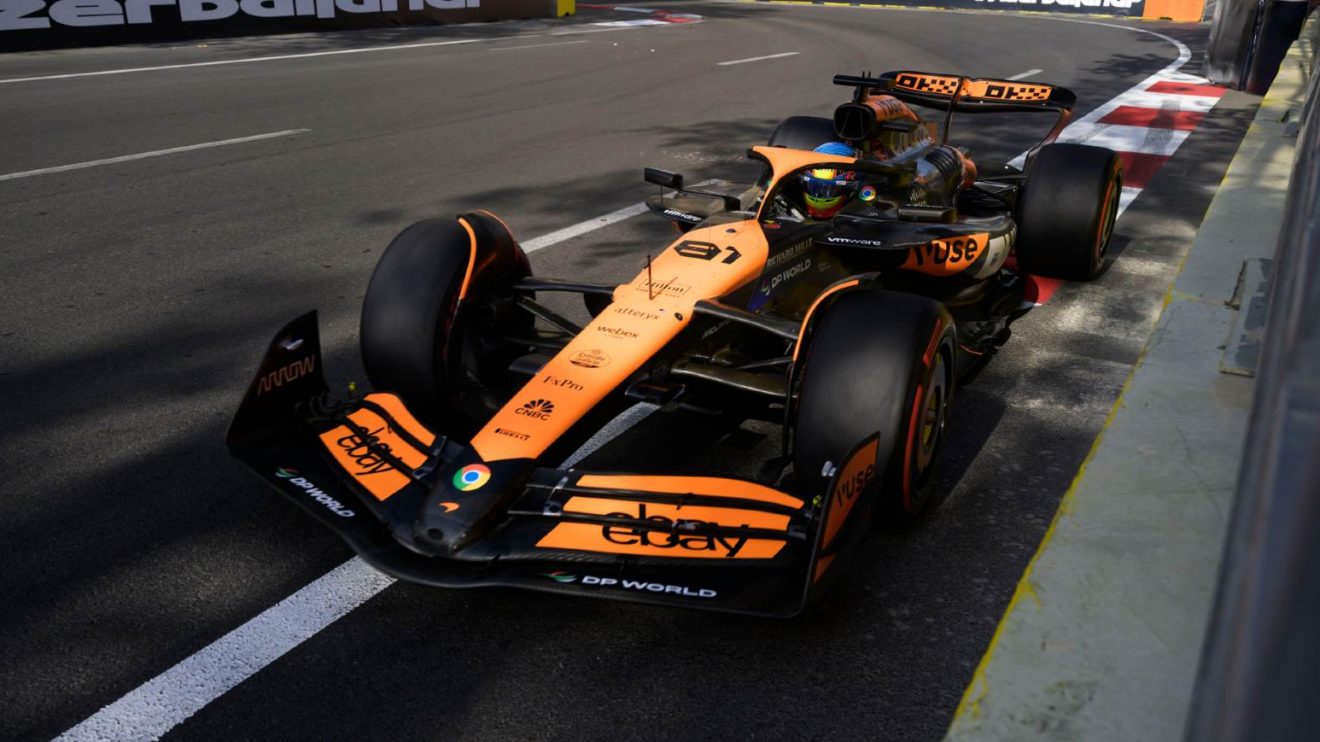
Oscar Piastri won the 2024 Azerbaijan Grand Prix, but he won't be able to use the same rear wing again.
McLaren’s range of rear wings, including the package in use for the United States GP, is being “proactively” modified.
McLaren has confirmed its full range of rear wings has been updated, in order to head off any issues related to the ‘mini-DRS’ effect seen in action over the Azerbaijan Grand Prix weekend.
McLaren to make changes to rear wings
Following on from the rear wing flexibility spotted on rear-facing cameras on Oscar Piastri’s car during the Azerbaijan Grand Prix, McLaren agreed to modify its low-downforce rear wing package to negate the so-called ‘mini-DRS’ effect.
At high speeds, the upper element of the rear wing could be seen rotating slightly and opening up the slot gap, and was quickly dubbed a ‘mini-DRS’ as it mildly aped the effects of the DRS – Piastri was able to hold off Charles Leclerc’s Ferrari for a lengthy defence despite the Monegasque being within DRS range for a significant chunk of the latter half of the race.
The rear wing has passed all FIA static load tests but its performance at high speeds led to discussions between McLaren and the FIA.
As a result, McLaren agreed to modify the low-drag wing used in Baku to prevent similar flexing in the future with the low-downforce package only expected to be used again in Las Vegas.
“Whilst our Baku rear wing complies with the regulations and passes all FIA deflection tests, McLaren has proactively offered to make some minor adjustments to the wing following our conversations with the FIA,” a statement from the team said after Azerbaijan.
“We would also expect the FIA to have similar conversations with other teams in relation to the compliance of their rear wings.”
Over the United States Grand Prix weekend, speculation in the paddock suggested the FIA has requested further adjustments to more of McLaren’s rear wing range.
McLaren denied these claims when asked by PlanetF1.com, but acknowledged that, as part of ongoing discussions, its entire rear wing roster – including the one being used at COTA – has been modified to reduce flexing.
A McLaren spokesperson told PlanetF1.com: “As previously mentioned, McLaren proactively offered to make some minor adjustments to our rear wing following the Azerbaijan GP.
“We have made minor adjustments to all our rear wings since Baku to varying extents to ensure no further issues in this area.”
More on McLaren in F1
? Zak Brown car collection: The legendary machines owned by the McLaren boss
? Who is Andrea Stella? From Michael Schumacher’s engineer to McLaren team principal
The adjustment to the rear wings comes as the FIA closely monitors the level of wing flexing, having introduced a technical directive at the Belgian Grand Prix to allow the governing body to assess the degree of flexibility.
The purpose of the technical directive is to allow the FIA to gain a greater understanding of how the wings of the F1 cars is flexing at high speed, in order to evaluate whether changes to the static load tests are required for the F1 2025 season.
An FIA statement issued ahead of the Singapore GP last month confirmed that the governing body is “currently reviewing data and any additional evidence” from Baku, with the FIA taking a closer look at potential flexing in the wings run by teams, but Piastri made it clear that McLaren has passed all inspections.
Asked in a pre-Singapore GP press conference whether there is too much fuss over a few millimetres, Piastri replied: “I mean, it’s legal.
“So yeah, as long as it passes all the tests. You know, we get tested a lot, and it passes.
“I mean, it’s certainly not the magic ticket or magic bullet for why we’re competitive, but it’s legal. It passes all the tests, so I’m pretty happy with it.”
Read Next: Red Bull perform FIA demonstration of bib ride height device in Austin paddock