

Christian Horner speaks out on the senior staff exits to hit Red Bull


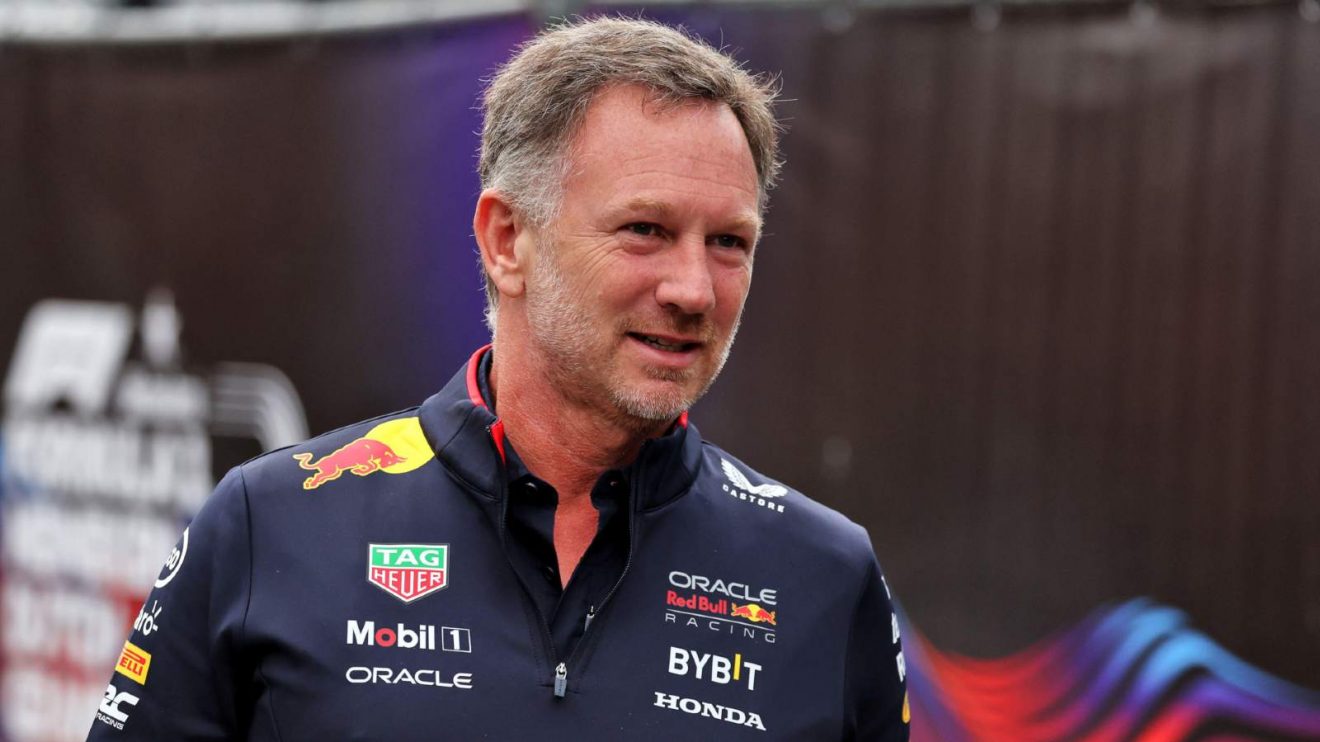
Red Bull boss Christian Horner.
The financial regulations played a major role in Red Bull’s inability to fight for some leading staff members this season.
Red Bull has seen some high-profile names depart this year, such as sporting director Jonathan Wheatley and strategy head Will Courtenay, as they’ve sought out new opportunities elsewhere on the grid – Wheatley to join Audi as team boss, and Courtney to McLaren as sporting director.
Christian Horner: Financial regulations make teams ‘limited in scope’
Red Bull also lost chief technical officer Adrian Newey as the respected engineer is moving on to a shareholding position at Aston Martin next season, having spoken about his desire to find a fresh challenge after almost two decades with the Milton Keynes-based squad.
Several key contract renewals have seen the likes of top-ranking engineers like Perre Waché, Ben Waterhouse, Enrico Balbo, and Paul Monaghan all remain loyal to Red Bull and commit their futures to Christian Horner.
But the challenges of retaining everyone is made far more difficult by the financial regulations, says Christian Horner, with teams now lacking the ability to simply offer more money as a counter-offer.
“You can’t have a Galactus because you can’t afford it,” Horner told Motorsport.com.
“You’ve got to look at bang for buck, and it forces you to make some really tough decisions.
“It’s tough. Jonathan was a very good sporting director, but he was an expensive asset. So you have to weigh things up.
“When he got the opportunity to move to Audi, it was: ‘Do you know what? I think you should go for that because of the way that regulations are. We’re limited in scope and what we can do for you here.
“‘So, if you have an opportunity to further yourself and go and earn significantly more money, go for it.'”
The financial regulations work by taking into account the salaries of operational and performance-related personnel, apart from the top three earners.
With neither Wheatley nor Courtenay believed to be in the top three at Red Bull, their wages thus have an effect on Red Bull’s cost cap spending and prevent the team from offering more money as a straightforward bargaining chip – not helped if the employee in question has hit a glass ceiling of what’s possible within the team’s structure.
“Jonathan has been here a long time, and he had an opportunity to become a team principal,” Horner said.
“He didn’t have that here, and his role was becoming ever more one-dimensional in that he was never here. He was always at a racetrack.
“He’s moved on and it’s allowed others to naturally step up. You’ve got to have that evolution.
“It is the same with Will Courtenay and strategy. He has been here for 20 years. We talked about other roles within the group. He was offered a bigger role at a very high salary by McLaren, and at that point, you have to say: ‘Good luck. Go for it.’
“But at the same time, it gives an opportunity for Hannah Schmitz to move up, which, if she hadn’t had that opportunity, she’d have been a prime target for somebody.
“In any organisation, you’re going to have evolution. We had less than 5 percent turnover here, so we have tremendous loyalty within the team.”
More on Red Bull and Christian Horner
? Inside Red Bull: Christian Horner and the other major players in Red Bull’s hierarchy
? What happened next? The nine Red Bull drivers who didn’t land the top seat
Horner pointed out that, even compared to just over 10 years ago when Red Bull swept all before it with Sebastian Vettel, less than 20 percent of the same staff remains in place, such is the slow and steady turnover that occurs within any racing organisation.
“When I came here in 2005 we assembled a fantastic team,” he said.
“If I look around the engineering office, particularly trackside compared to when we were winning with Sebastian Vettel and Mark Weber, during that 2010 to 2013 period, I think there’s only three people in the engineering office that were there at that point, out of probably the 25 that are trackside.
“There is Paul Monaghan, who’s still with us. Michael Manning, who is still with us and does all the starts, and it’s probably only Jonathan and Will that were also there.
“Hannah was a graduate from Cambridge University at the time, but the rest of the team: the race engineers, control engineers, everything evolves, and you have to have that within any organisation.”
Read Next: ‘I hate everyone’ – Lando Norris on the ‘nonsense’ perception of on-track friendships


