

Ugo Sivocci: Remembering the inventor of Alfa Romeo’s Quadrifoglio


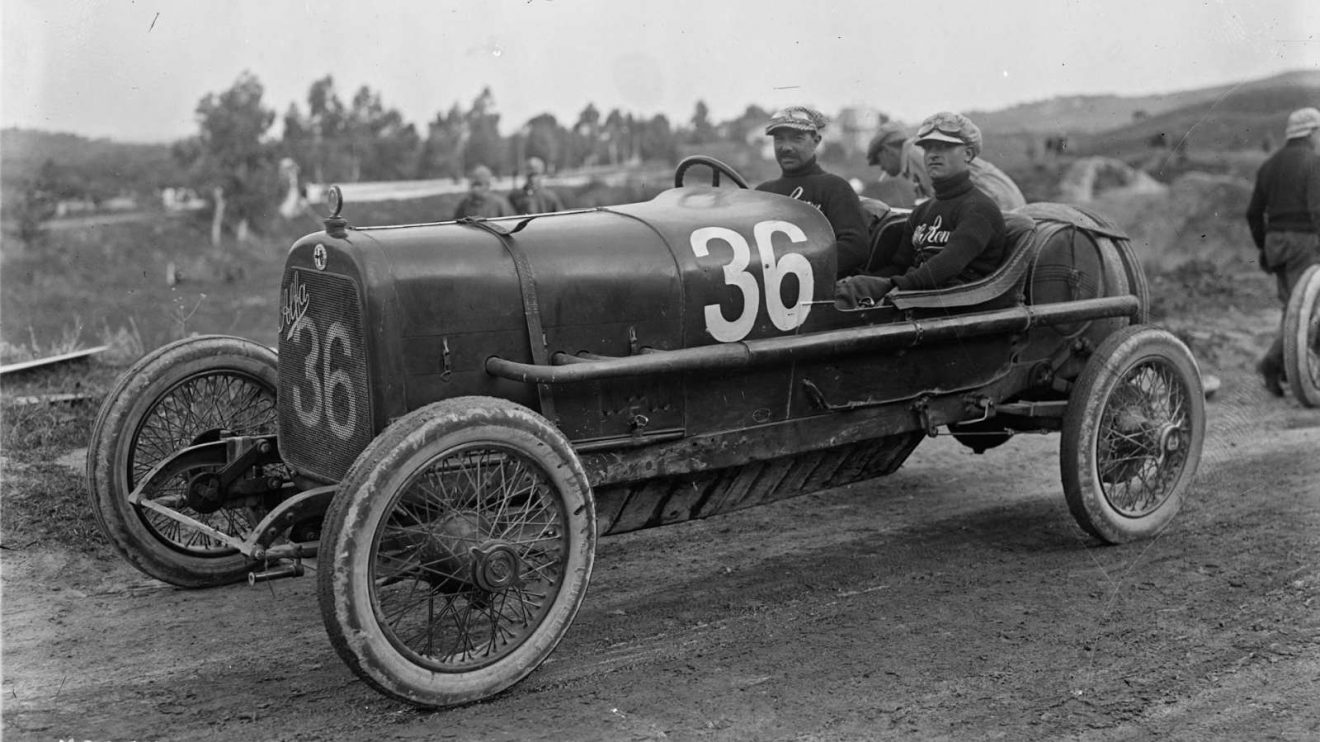
Ugo Sivocci in his Alfa Romeo 20 30 ES at the 1922 Targa Florio.
When you think of Alfa Romeo, you inevitably think of the Italian team’s long legacy in motorsport, and its history of beautiful sports cars. You’ll also likely think of the brand’s Quadrifoglio — the four-leaf clover designation included on Alfa Romeo’s performance machinery.
But fewer people know where the Quadrifoglio came from, and why it has become so closely associated with Alfa Romeo. Today, we’re remembering the man who introduced it to the brand: Ugo Sivocci.
Ugo Sivocci: A superstitious racing driver
Ugo Sivocci was born on August 29, 1885 in Salerno, Italy — and like many Italian racers of his era, he got his start on two wheels. In fact, Sivocci is considered one of the pioneers of bicycle racing in Italy.
But after World War I, his interests shifted. Burgeoning automotive technology had become more widespread during the conflict, and Sivocci moved to Milan, where he secured a job as an automotive mechanic.
Somewhere along the way, Sivocci met a young man named Enzo Ferrari — a mechanic himself, and an aspiring racing driver. It was Sivocci who encouraged Ferrari’s desire to race, and in 1920, Ferrari repaid his mentor in kind by inviting him to join Alfa Romeo’s racing team, named Alfa Corse.
Sivocci was keen to sign on… but there was a problem. He simply couldn’t win.
No matter how hard he tried, the Salerno-born racer couldn’t secure that coveted victory. Instead, time and time again, he finished second. Not due to his skill; rather, Sivocci reasoned that Lady Luck simply wasn’t on his side.
So, heading into the 1923 Targa Florio, Sivocci made a bold call. He grabbed cans of white and green paint and drew two four-leaf clovers — two quadrifoglios on the nose of his car.
That day, he won the Targa Florio at an average speed of 36 miles per hour.
More from the Ferrari archives:
? The story behind the huge missing piece in Ferrari’s trophy cabinet
? Meet Luigi Chinetti: The Ferrari importer who changed Ferrari racing history forever
But how did Sivocci’s personal good-luck charm become emblematic of an entire brand’s performance operations?
As with many early racing stories, it’s a tale of tragedy. Five months after his victory at the Targa Florio, Ugo Sivocci was killed practicing for the Italian Grand Prix. It’s said that Sivocci ran out of time before the race and failed to paint those white-and-green four-leaf clovers onto his car; as a result, his luck ran out.
Ever since, Alfa Romeo’s racing cars — and its high-performance road cars — have been adorned with the quadrifoglio, in honor of one of Italy’s racing heroes.
If this story sounds somewhat familiar, it’s because Ferrari’s iconic Prancing Horse logo is said to come from somewhat similar origins. Enzo Ferrari liked to recount that the family of fighter pilot Francesco Baracca approached him after winning a race to ask if Ferrari would paint the prancing horse onto his cars in the future. Baracca, it’s said, painted that same logo onto his planes.
Until World War II, the quadrifoglio was used only on race cars; after the war, it became Alfa Romeo’s omnipresent marker of any high-performance car.
Current high-performance versions of the Alfa Romeo Giulia and Stelvio both boast the quadrifoglio to show that they’re a more impressive version of the standard road car.
Of course, the logo was visible on the cars of the Alfa Romeo F1 team between 2018 and 2023, but Ferrari drivers Kimi Raikkonen and Sebastian Vettel both boasted the quadrifoglio badge on their cars and race suits during the 2017 season out of respect for the complex heritage of the Italian racing brand.
Read next: Ferrari-bound Lewis Hamilton’s poignant post as emotions hit hard at Monza