
Red Bull tech director makes notable admission over new F1 2026 regulations


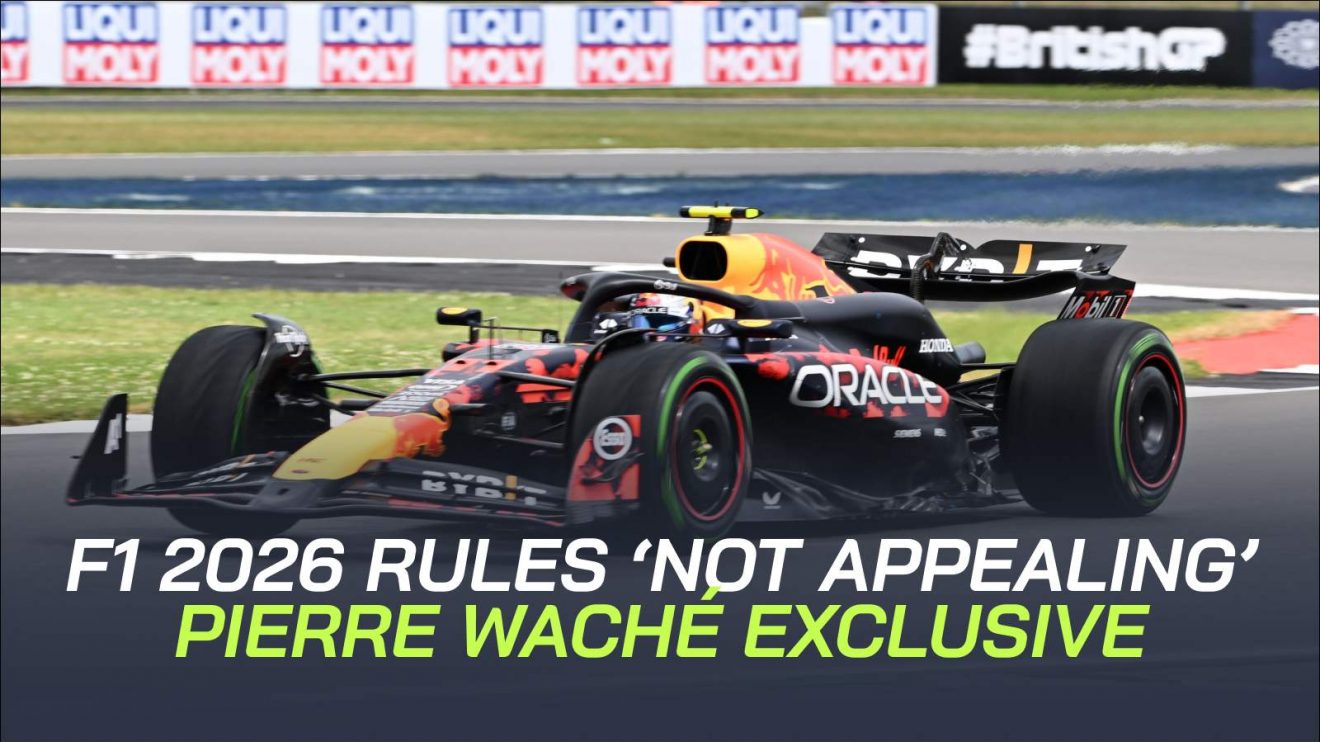
Pierre Waché has said the F1 2026 regulations currently don't look very appealing, but that is likely to change once the rules are introduced.
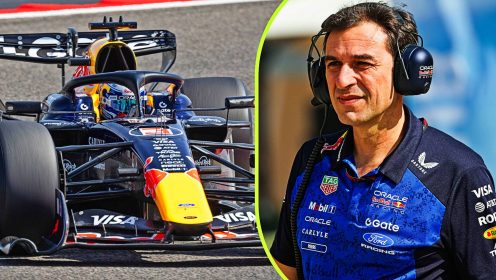
Red Bull technical director Pierre Waché is eyeing the F1 2026 regulations with some trepidation but says he expects to eventually enjoy them once in place.
The current F1 regulation rulebooks will be discarded after the 2025 season, with revolutionary chassis and engine regulations coming into place for 2026.
Pierre Waché: F1 2026 regulations ‘not very appealing at the moment’
The new regulations have been brought into reality with the power unit regulations having been created first – leading to the unusual scenario of the chassis being designed around the unique power characteristics that will come into play as F1 switches to a 50/50 ratio between internal combustion and electrical power.
Active aerodynamics are being brought into play to counteract the expected lap time loss of the new cars and, given the increasing complexity of the rules, the likelihood of any given team nailing the regulations to dominate the first year or two, at least, of the new rules.
Red Bull has been in that position over the past two years, with the team’s understanding of ground effect standing it in good stead to claim the 2022 and ’23 titles. It’s only now, in the third year of the rules, that rival teams have closed the gap as convergence has come into play – meaning a highly competitive championship for 2024 and, presumably, for ’25.
Speaking to PlanetF1.com for an exclusive interview at the Belgian Grand Prix, Red Bull technical director Pierre Waché agreed with the idea that a minimum term be brought into play for regulations in order to ensure a few years of competitiveness – F1 being in a particularly sweet spot in terms of the show right now, just over a year out from these rules being changed.
“Yes, I agree with that,” he said.
“This is not the first time we have this issue. We had in 2021 a big battle, a fantastic championship.
“Before that, in 2012, was fantastic and then we introduced a new engine in [2014].
“It is the nature of the sport and I think, the longer you stay with the same regulations, the more competitiveness you have from everybody – everybody knows that and the chance to change it.”
The reveal of the 2026 regulations had been largely met with trepidation as to just how good a show they will create, with the most (in)famous fear being expressed by Red Bull’s Christian Horner as he pointed out the possibility of F1 creating “Frankenstein” cars.
The expected drop-off in lap time, at present, is only in the region of a few seconds, but there are question marks over how naturally the cars will drive as the drivers must focus on energy recovery – it had even been postulated that drivers will need to downshift on the straights in order to optimally generate the energy required by their power units.
Waché admitted that, right now, the regulations don’t look particularly appetitising.
“I’m one of the people saying that it’s quite negative, but I think it’s the nature of the engineering aspect,” he said.
“When you have a very well-defined playfield of where you can make your job, and the system is changing, as an engineer it is part of the challenge aspect.
“It looks very small from our side, the freedom we could have is small at the moment, and that is what we are discussing with the FIA.
“It looks like they will be able to change it but, at the moment, it looks very low freedom and is not very appealing, as an engineer.”
More on Red Bull racing
? All the mid-season driver swaps Red Bull have made in their F1 history
? Red Bull RB17: The £5million hypercar that now has Adrian Newey’s full focus
But Waché said he expects that perception – for many – to change once the rules are actually in place, as the engineers get their heads together to address the unique stumbling blocks and issues the complex regulations will present.
Asked whether the ruleset might affect his enjoyment of F1 as a competitor, Waché said: “Yes, it could be.
“After the overreaction of what… looking in the past is never good and the quick reaction of the problem like that, as a general aspect, could be ‘There is no point to be there because you have no freedom’.
“But, however, normally in this business, you realise that, after a few months, when you work on it, you start to really enjoy it because you still have to find some new challenge in order to push the system and the boundaries even more.
“I normally quite enjoy everything that I’m doing – just the main question I have is more if I am at my best to do my job. And, if somebody else is better, give him the space to do this job.
“The motivation will be there, it’s more the capacity to understand the problem – if I’m not there anymore, then somebody else will do it.”
Read Next: Pierre Waché exclusive: Red Bull life after Adrian Newey and his disinterest in personal glory