

Meet Luigi Chinetti: The Ferrari importer who changed Ferrari racing history forever


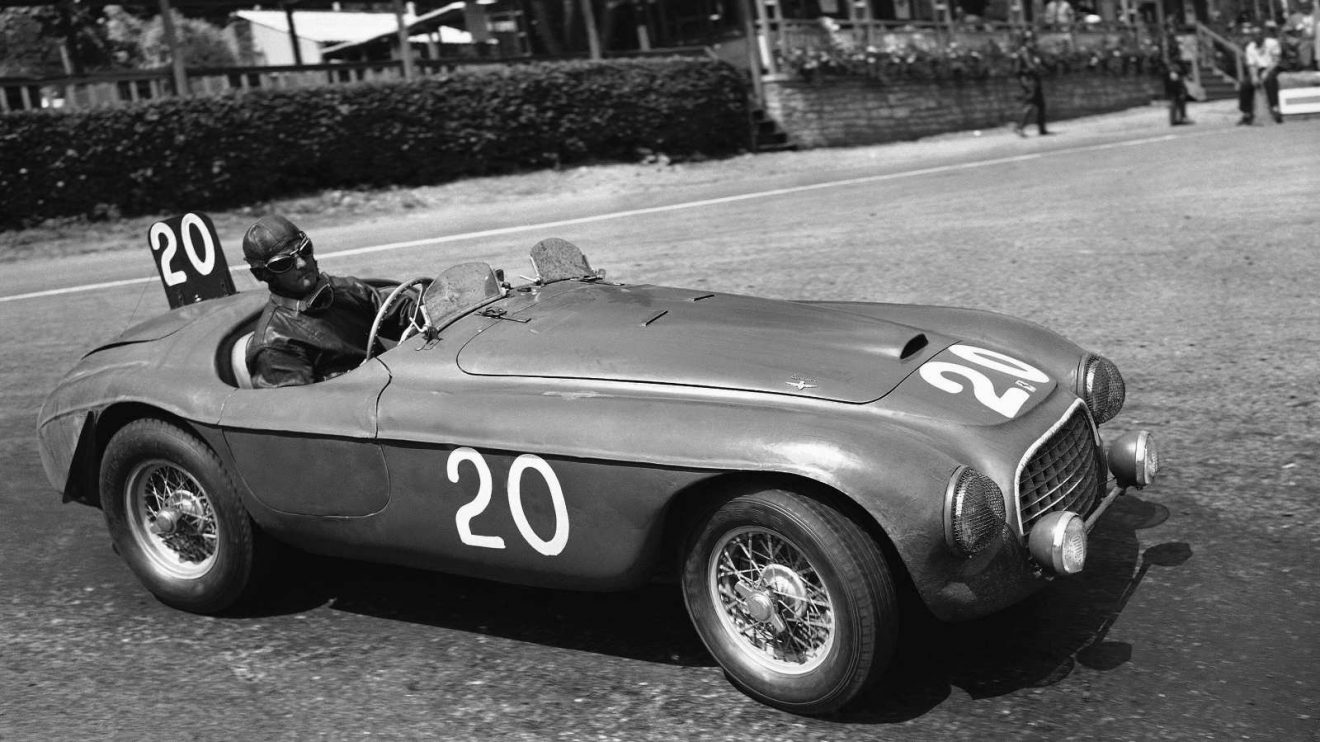
Luigi Chinetti races a Ferrari 1 at the 1949 Belgian Grand Prix
It’s 1954 in the United States of America. The first-ever issue of Sports Illustrated is published in August. The first Burger King chain opens in Miami in December. The first successful kidney transplant takes place. Oh, and Luigi Chinetti sells the first Ferrari in America.
It’s the first step in a move that will establish the Italian automaker as an international powerhouse with a significant income stream stemming from America — and it’s also a move that will cement Luigi Chinetti’s name as one of the most important wheelers and dealers in motorsport history.
Luigi Chinetti: From racer to Ferrari importer
Born on 17 July, 1901 in Jerago con Orago, Italy, Luigi Chinetti grew up honing his mechanical skills in his gunsmith father’s workshop. By age 16, he was such a skilled mechanic that he took off to work for car company Alfa Romeo, where he met another of the Italian outfit’s young hires: Enzo Ferrari.
But Chinetti was uneasy with the shifting political tides in Europe. During World War I, he moved to Paris to sell Alfa Romeos. When World War II kicked off, he joined Lucy O’Reilly Schell’s Écurie Bleue team, which traveled to America for the 1940 Indianapolis 500. Both Chinetti and driver René Dreyfus remained in the U.S. after the event.
In 1949, when the war had ended, Chinetti returned to Europe, where he found his property in Paris had been destroyed, and that Ferrari’s factory had been converted into a tool production facility.
During a Christmas Eve meeting, Chinetti promised to buy 25 of Enzo Ferrari’s first production sports cars, and that he would sell those cars in both Paris and the United States.
See, Chinetti had an eye for a good automobile. In 1932, he won the 24 Hours of Le Mans with co-driver Raymond Sommer. The next year, Chinetti and Louis Chiron won the 24 Hours of Spa.
And in 1949, he drove a Ferrari 166M to victory at Le Mans, racing for over 23 hours.
Chinetti knew the car was good. He also knew that, after World War II, Americans had a lot of money to spend and wanted to spend it on the incredible, nimble sports cars they’d fallen in love with while fighting overseas.
Having sold a few already-raced vehicles to American buyers like Briggs Cunningham, Chinetti was certain of success.
Motorsport history from the archives:
? The scandalous story behind the man who introduced glamour to F1
? From a Mini Cooper to a Lotus 24: One Texas legend’s first F1 experience at the Nurburgring
And he was right. In early 1950s, Chinetti became the sole importer of Ferraris in America, and in 1954, the first production model left his dealership.
Part of what made Chinetti so successful was his ability to market Ferrari’s machines like luxury goods. Of course, the sports cars were gorgeous — but Chinetti built up a mystique and a story that made them unforgettable.
“You never met another man like him,” former dealer and racer Bob Grossman remembered.
“Everybody tries to dissect Chinetti, to figure him out. He was much shrewder than anybody thought. He reminded me of Gucci.
“He made the cars so unattainable; he made you want the car, he made you eat out of his hand.”
In 1958, Chinetti developed yet another marketing tool: NART, or the North American Racing Team. Ferrari often provided the cars, while the funding for the operation came from a handful of wealthy fellow racers.
If Enzo Ferrari didn’t feel like sending a car all the way to the U.S. from Europe, he’d ask Chinetti to field it with NART. Sometimes, Ferrari felt there was no point sending a factory effort to North American Formula 1 finales; NART would often step in to field the Italian marque’s full-time talent.
NART itself took victories at prestigious events like the 24 Hours of Le Mans and the 1000 km of Paris — and it even fielded the Ferrari 158 that John Surtees drove to the F1 World Championship, since the final two races of the year took place in North America.
In the late 1970s, Chinetti sold his Ferrari dealerships, and a few years later, the NART team closed down. But by that time, the United States had become the largest national market for Ferrari sales, and Chinetti had singlehandedly changed the motorsport world for the better.
Read next: F1 driver sackings: The most brutal firings and bitter disputes in F1 history