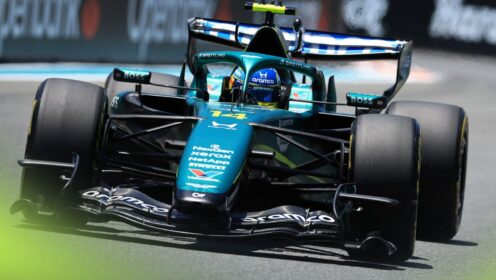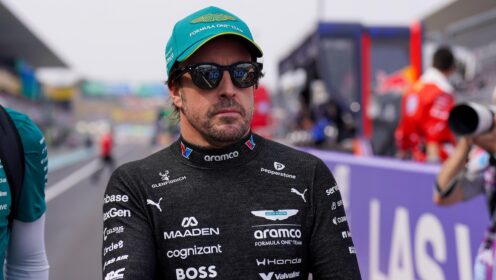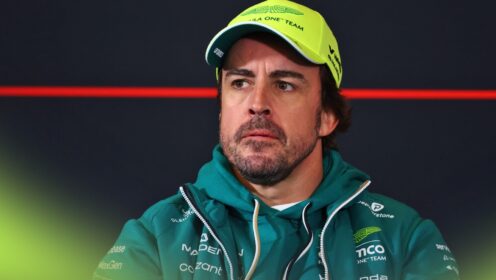

What is going wrong at Aston Martin? Five reasons causing untimely decline


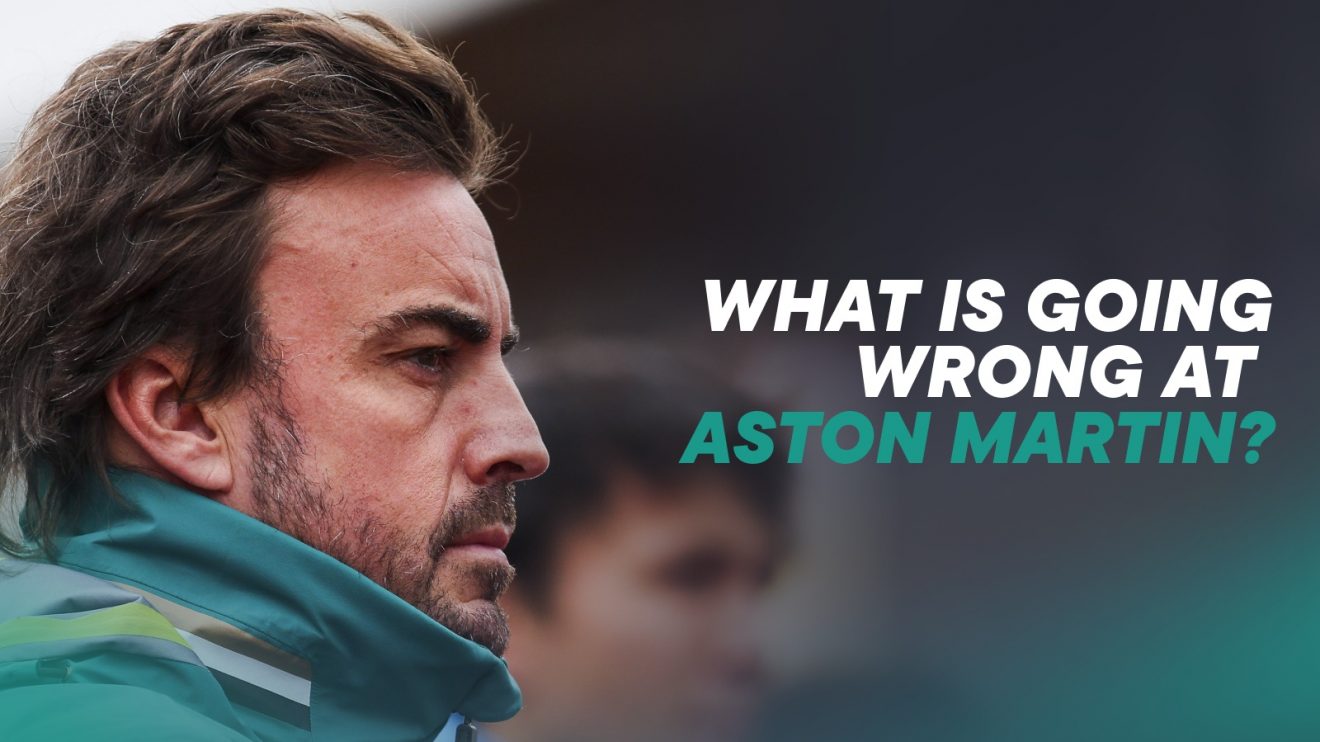
Aston Martin have fallen away from their incredible form of early 2023.
Aston Martin are a hard team to judge. If you removed their start to the 2023 season and looked at their position in the standings now, you would suggest there has been solid progress over the last few seasons.
But that blistering start to 2023, bettered only by the all-conquering Red Bull, changed the expectations for the Silverstone team and suggested they were ready to compete at the head of the F1 table.
Now though, Aston are a team in a bad moment and while the other major players have improved, Mike Krack’s team has regressed.
Following the Spanish Grand Prix, they are fifth in the standings, 93 points behind P4 Mercedes and looking over their shoulder at an improving RB.
So how has a team that looked likely to give Fernando Alonso his first win since 2013 fallen away like this? Well there is more than one reason behind it.
Aston Martin’s correlation issues
A buzzword within any Aston Martin media session from mid-2023 onwards was correlation.
The idea of an upgrade is to build on what you already know and the number of simulations that a team runs in the modern era means that you have a reasonable estimation of what to expect.
Except in 2023, Aston didn’t. The data their simulations were producing was not lining up with what they were seeing on track – a similar issue contributed to Mercedes’ downfall in 2022 – and as they fitted new parts on the car, they found themselves falling down the pecking order.
But upgrades are not made in isolation. Instead you will hear of ‘development paths’ and teams will have planned out well in advance before we actually see it on the car.
So if you make a misstep, it is not a case of just reversing it.
I asked Alonso this very question in Spain and was hit with the blunt response of “I’m a driver, not a technician” but performance director, Tom McCullough, has often been probed about why the upgrades were not delivering and he highlighted the problems that occur when 1+1 does not equal 2.
“Nothing ever correlates 100 percent,” he said in August last year.
“But you’re always trying to stay relative to what you expected, what you get. That changes from track to track. So the same car from track to track, that changes.
“There are so many other factors that are influencing it, but the bottom line is it’s largely doing what we think it should be doing, we just need to add the performance to the car and it’s a relative game.
“You’re always taking decisions in the wind tunnel and CFD to say ‘OK, flow structure here is better, ride height is better, wind-yaw, rear wing levels’ – all these things. You want to just offset performance. But it’s very rare that you do that.
“The key to the job is to bring the performance, and then to understand what the actual cars doing and feed that back into how you optimise the car on the track, which always takes a few races to do, and then how you feed that back into the development.”
In 2023, Aston believed the data their factory was producing and ultimately it was a mistake that did not cost them one race or even two – but effectively the majority of the season as they attempted to undo their work at a time when their rivals were improving.
“Obviously, you look already before, but I think Hungary was the last element in the puzzle,” team principal Mike Krack said in Belgium last year on Aston’s conclusion they had made development mistakes.
“It is a track where we expected to be a bit more competitive, and we were not. And that was the last data point to confirm that we have maybe not gone in the right direction.”
A mistake like this is not something easily recoverable and requires drastic moves to make up for lost ground.
In searching for answers, Aston Martin have made a more volatile car
To combat their mistakes, Aston Martin deployed what was termed an “aggressive” development plan headed by technical director Dan Fallows but in the strive for speed, the team have sacrificed balance, something they noted at Imola.
“At Imola, when you start from where we started, it’s difficult,” Krack conceded. “To come away with two points, I think it was quite a good outcome.
“It shows that the car is still capable of doing things, but we have also seen that it is difficult to drive.
“We had a couple of offs over the weekend – [Alonso’s] one from Saturday actually impacted us the most, because we were really on the back foot from that point onwards – so some lessons learned.”
So Aston are now in the unenviable position of having an underperforming car and one that is hard to drive, a situation Mercedes found themselves in up until very recently.
F1 teams never stand still
On the subject of Mercedes, they are a perfect example of how quickly things can change in F1.
Aston’s resurrection in 2023 was billed as one of the biggest turnarounds in F1 history and yet a few short months later, they were bested by McLaren.
The pace of development in the sport is relentless, making the phrase “if you’re not moving forward, you’re going backward” all the more true.
The problem for Aston is that while they have stuttered, McLaren, Ferrari and Mercedes have overtaken them while Red Bull have continued to improve. Aside from a blip in Spain, we are even seeing teams like RB and Alpine now making strides and moving Aston Martin into the crosshairs.
In Barcelona, Aston Martin made the second smallest improvement in quali time from 2023 to 2024, only worsened by Alpine and it is not a result in isolation.

Alonso has called for Aston’s staff to “talk less, deliver more” but that will need to happen sooner rather than later.
New factory teething problems
Ahead of the British GP last year, I and a few other journalists were given a look around Aston Martin’s shiny new factory that had just come online.
£200 million was poured into the facility by Lawrence Stroll and it was a feat of design, one manufactured to bring the team’s departments closer together.
This new facility is undoubtedly a plus but Krack did admit there was difficulty at first.
“We were a bit concerned with the change in working environment and working conditions,” he said. “You always need a bit of time to adapt, but the time was really short.
“It is quite good now. If you want to see where we are with a new part, you just go downstairs and you can see it. It has already brought us a major step forward.”
But could the arrival of this factory explain some of their simulation problems? It is not out of the question that in the early stages of it being online, the factory was producing some strange results that led Aston down the path they are currently on.
A team in flux
The final point is more of an existential one and it is the question of what are Aston Martin? Are they a midfield team? Are they title contenders? Or are they somewhere in between?
The Silverstone outfit has enjoyed plenty of investment over the recent years, including their shiny new factory, and are bankrolled by the billionaire Lawrence Stroll but success in F1 is not an overnight thing.
Their early 2023 performance shifted the dial and that expectation has, perhaps unfairly, been placed on them ever since.
Just look at the teams around them. Red Bull and Mercedes have both spent the last decade winning titles. McLaren and Ferrari are the sport’s two oldest teams.
These are teams that have been there, done that and when the stakes are this high, that does have an impact.
Had they not started 2023 like they did, then it could be said Aston are where they should be for a team trying to improve their form. P7, P7, P5, P5 would represent steady progress from them.
Maybe then the expectation of Aston is a little too high right now but it is one also shared by Stroll, who would much rather see his team perform like they did in 2023 then they are now.
The rest of the season will arguably define what Aston Martin are as an F1 team. Fix their upgrade issues and they can start looking upwards again. Fail to do that and there is only one way they will be looking.
Read next: F1 2024 power rankings: The scores are in as the 10-race mark is reached