

Claire Williams exclusive: How Williams dream turned into a nightmare before forced sale
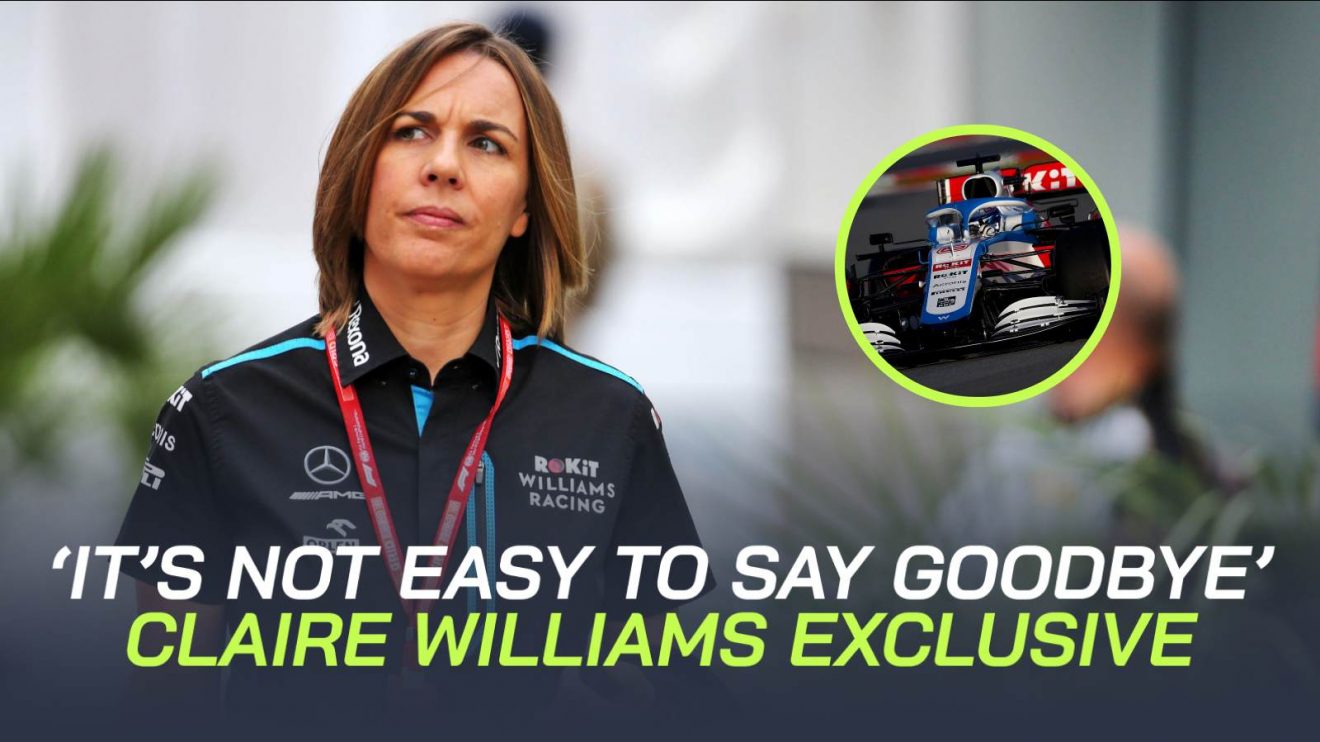
Williams' former defacto team boss Claire Williams has told PlanetF1.com the story of the final years of the team prior to the sale to Dorilton Capital.
Following a great start to life as defacto team boss at Williams, Claire Williams had to cope with several agonising years of struggle prior to selling up to Dorilton Capital.
Last month, former F1 team leader Claire Williams told PlanetF1.com all about her first years in charge of her family’s eponymous team, with the first few years yielding success and glory. But the tide was to turn, as Williams recounts in the second part of our extensive interview.
The domino pieces of Williams’ years of downfall begin
Having had a stellar start to life as an F1 (deputy) team boss, the going started to get tougher for the Grove-based squad in 2016. Slipping to fifth place in the Constructors’ Championship, a position repeated in 2017, Williams was finding that the exceptional start she’d had was running out of steam.
Nico Rosberg’s shock retirement from F1, days after winning the title, resulted in Mercedes coming to take Valtteri Bottas away from Williams. This left Williams with Lance Stroll and an empty cockpit, as Felipe Massa had decided to retire from F1 after 2016.
As a result, Williams had to find a solution – and it was Lawrence Stroll, Lance’s father, who ended up planting the seed that led to Williams picking up the phone to convince Felipe Massa to stay on.
“That was the quickest conversation I had, getting Felipe to come back,” she remembers.
“Clearly, we never wanted to lose Valtteri to Mercedes but he was chomping at the bit to go – quite rightly, Mercedes was championship-winning at that point and Toto [Wolff] wanted him in the car.
“I managed to negotiate a very nice settlement to release him, it’s probably one of the highlights of my career getting that money out of Toto!
“Valtteri really wanted to go, and that’s not a good scenario to be in – when your driver wants to be somewhere else that badly like Valtteri did.
“My biggest problem at the time was ‘How on earth am I going to get to replace him?’ There weren’t guys lining up, that we wanted to put in the car necessarily.
“I think it was Lawrence Stroll at the time who said, because Lance was on our young driver programme, ‘Why don’t you phone Felipe’?
“I phoned Felipe, and he jumped at the opportunity and we got him back in the car. I don’t think that his performance was in any way compromised because he hadn’t been in the car for a while or he’d retired previously. Felipe’s a racing driver. That’s what they do. They get in race cars, and they drive fast.”
But while the drivers were sorted out for 2017, the issue of who was to lead the technical development of the cars was another issue that had to be overcome.
A key signing around this time was Dirk de Beer. The South African engineer, who resigned from the Alpine F1 team earlier this year, took up the role of head of aerodynamics in early 2017.
Pat Symonds, who departed at the end of 2016, was replaced by Paddy Lowe in the role of chief technical officer in early ’17.
Having left Mercedes after negotiations over a renewal of his contract broke down, Lowe had spent the previous four years contributing to the dominant spell enjoyed by the Brackley-based squad.
Lowe was also reported as taking on a shareholding position with Williams, joining the board alongside Claire and CEO Mike O’Driscoll, although this shareholding never actually came to be.
Lowe was a big-name signing and, hopefully, would net the results to match. But, as Lowe found his feet with Williams, the team itself had started to become increasingly concerned as the results slipped away – points, not podiums, had become the target.
“Around the beginning of Q2 of 2017, I think we were starting to feel like the other teams were really catching up,” Williams recounts as we begin our chat about the final years of her tenure leading the team.
“I can’t remember at that point where we would have been in the Constructors’ Championship, but things were starting to feel like they were on the decline.
“We were obviously concerned, I think, at that point, and thinking ‘What on earth do we need to do, we’ve got to propel ourselves back, the plan is not to go down’.
“The plan was always to keep going up. Certainly, in 2014 and ’15, we were thinking to ourselves ‘Why can’t we be fighting for second next year in the championship?’
“Obviously, we then started to take a bit of a downward turn. As we went through 2017, we saw quite how much other teams were spending, particularly at the top of the grid and into the midfield.
“Costs were escalating and the technical regulations were incredibly difficult. We needed to, as any team does, spend our way out of it, but we didn’t have the budget to do that.
“Then, going into 2018, producing the car, we didn’t have the budget, and things just started getting bad from there.”
Given that this was the point at which Williams began to slump from a highly respectable upper-midfield team capable of upsetting the main players, were there any decisions Williams herself could have made that would have changed the outcome before the situation deteriorated significantly?
“There are always decision that you can look back on with regret that’s life,” she said.
“But Formula 1 is a fast-paced, highly pressured environment. Every single day, you are expected to make decisions that can either make your team incredibly successful or take your team to the bottom of the Constructors’ Championship table.
“At the time you make your decisions, armed with the maximum amount of information that you can arm yourself with, you make what you believe at the time is the right decision for your team.
“You can’t do anything other than that – no one is sitting there going, ‘I’m going to make this decision because I really hope that it’s going to bring my team to its knees’, are they?
“In hindsight, I look back and I can think to myself, ‘Well, I wish I had done that, or I wish I hadn’t done that’.
“But I made the decision based on the information I had at the time, that I thought was going to take the team back to where we wanted it to be. Your heart is always in the right place on these things.
“But, sometimes, some of the decisions that you make do not work out and you have to live by them.”
2018 struggles prove an appetiser to the nightmare of the F1 2019 season
Securing fifth once again in 2017, the 2018 car would be the first car under the new technical team led by Lowe and De Beer. With Massa retiring (for good this time) after 2017, the team signed Russian driver Sergey Sirotkin alongside Stroll and it would prove to be a year of toil for Grove.
Scoring just seven points, Williams slipped to 10th in the Constructors’ Championship and, having already got confirmation at the start of the season that title sponsor Martini was to depart, new funding sources were required.
The next 12 months would prove to be the most difficult of Williams’ career, with few moments of respite in a year that took its toll emotionally as well as bringing the team to the brink of ruin.
Having signed a new title sponsor in the form of mobile phone company ROKiT, the FW42’s development fell way behind over the winter – to the point where the car itself wasn’t ready for testing when the official pre-season began at the Circuit de Barcelona-Catalunya.
For the first time, Williams had to contend with the harsh criticism of the world’s media – the full glare of which was fully focused on the most egregious of failings for an F1 team, that being an inability to show up with a working race car.
With the FW42 missing the first two days of testing, it was finally fired up and sent out on track midway through the morning of the third day as George Russell was given the honours of shaking down the car.
“I don’t have any grey hair but I can’t believe that my head did not turn white during that period,” Williams said when I asked if this marked the lowest point of her leadership.
“Was it the hardest – it probably was, you know? It was an incredibly difficult time and it was probably one of the biggest failings of my time at Williams.
“We didn’t get done what we needed to do. We didn’t get the car to testing. I was the team principal at the time and the buck stops with me, ultimately.
“What I can say about that period is we got through it. We got through it as a team. If anything came out of that, we made absolutely sure that we learned our lessons.
“We did not just go ‘Oh, well, let’s hope we do better next year’.
“We spent month after month doing after-action reviews to understand where the failings were in the system on why that car did not meet the deadline.
“We made a number of changes off the back of those learnings. We got the 2020 car to testing ahead of time, it was ready ahead of time.
“We’re all human. We all make mistakes. Williams was a legacy team. I think we just assumed we’d get our car to testing, and we didn’t. It was horrific and not an experience I ever want to go through again.”
Declining to comment on the part Lowe played in that failing in his role as chief technical officer, the engineer took an extended leave of absence from Williams shortly after pre-season testing ended.
This coincided with Williams also having to make design changes to its troubled FW42, in order to ensure the legality of parts such as the front suspension, mirrors, and barge boards.
With the first car designed under his leadership proving uncompetitive, and the second having such a troubled start to life, it’s perhaps no surprise that Lowe never returned to work with Williams. In June, he confirmed his decision to leave Williams, including departing the board of directors. De Beer, as well as chief designer Ed Wood, also resigned from their roles in April 2019.
Williams was left scrabbling for replacements for the roles now vacant, chief engineer Doug McKiernan, who had only just joined the team, assumed responsibility for aerodynamics and design, with Dave Wheater stepping up to lead the aero department.
Robert Kubica speculation mars Williams’ efforts to turn 2019 around
Unsurprisingly, 2019 proved to be an unmitigated disaster despite the best efforts of the aforementioned. With the FW42 well off the pace, the best efforts of George Russell and Robert Kubica resulted in a solitary point. While Russell very much had the edge on Kubica all season, it was the Polish driver who scored the point – courtesy of 10th place in Germany.
When it comes to drivers, Williams was known for her enthusiasm about the potential of Russell’s talent, having signed him to a three-year deal – and her face lights up when I ask whether the young Brit was the driver she was proudest to have had on her roster during her tenure.
“I think both George and Valtteri really, we brought them both on as rookies and they both went on to drive for a championship-winning team,” she said.
“Clearly, I wish that we’d been able to… we did manage to give a competitive race car to Valtteri but, with George, we didn’t. But both of them were a joy.
“George, in particular, I loved working with him. It was one of the highlights of my career. We always said, some drivers are very ‘Williams’. And George was a very Williams kind of driver.
“He had the absolute best, brilliant work ethic. He was charming. He was incredibly motivated and was a real team player. He got it, and it was a privilege working with George.”
Williams had also picked up quite a lot of goodwill as a result of signing Kubica. The Polish driver had suffered catastrophic injuries in a rally crash prior to the 2011 season and had spent years working to get back into F1 – a feat he finally managed despite struggling with mobility in his right arm due to the injuries and life-saving surgeries he had endured.
“I think it was great Williams was able to bring Robert back. Robert had had a great start to his F1 career and had been tipped to be incredibly successful,” Williams said of the Polish star.
“Then he had his accident and suffered the injuries that he did, which he did the most extraordinary job rehabilitating from.
“The very fact that he was able to get into a Formula 1 car again was nothing short of extraordinary, really. We were very proud of that when we made those announcements, and he joined the team, and he was a part of that 2018 season.”
But Kubica’s struggles for form throughout the year led to further headaches for Williams, with murmurings – some not so quiet – from his camp and in Polish media that his efforts were being hamstrung by being given inferior equipment to Russell – the possibility that Kubica simply wasn’t as capable as Russell seemingly not one that was acceptable.
Bristling at the suggestion, it’s clear this theory is something that greatly irritated Williams at the time, with the team leader having labelled the speculation as “crazy” during the middle of that summer.
“That’s not how Williams operates. We pride ourselves on integrity at Williams, and that’s not operating with integrity,” she says in the here and now.
“Most importantly, operationally, everyone saw how difficult 2018 was for our team, financially and operationally.
“To think that we can come up with two different concepts, and then build two different race cars… I don’t really have it in me to decide I’m going to do that to one driver over another.
“Anyone that knows me, would absolutely know that about me – that I’m just not Machiavellian enough to favour one driver like that over another. Certainly Williams, as a team, would never do anything like that.”
Claire Williams: Focusing on the suffering would be ‘a waste of energy and effort’
Having had such an enjoyable start to life leading an F1 team, the experience had completely changed by the time 2019 came to an end. It had been an exceptionally gruelling year, a doubling down on the trials of ’18, and Williams said it had been difficult to come to terms early in the year with the misery that lay in wait – but she chose not to focus on the negativity.
“We had our hands full with that testing period, and then afterwards. We knew from that point, if not before, it was going to be just probably the most challenging year that we’d had,” she said.
“But, when Williams was in trouble, for me, it felt like a family member was in trouble. I would have to do everything in my power to try and fix it.
“That’s certainly how I felt about Williams, those last few years – that Williams was in real trouble, it was really suffering. All I could do was roll my sleeves up and fight, and do everything in my power to try and turn things around.
“There’s no point looking down the season, going ‘Oh God, this is going to be a nightmare’.
“It’s just a waste of energy and effort. What do we need to do to fix this, we’ve got to get working now, in order to do that.”
Given that Williams was her family team, and that she wasn’t a dispassionate external hire simply ‘doing her job’, did that family connection make it more difficult to make critical decisions?
“No, I think it actually made it easier. Because, in effect, I was operating it as my team,” she said.
“I didn’t have an owner that I had to report to. It made me able to be much more agile in having to make those decisions that I needed to make, in those challenging circumstances.
“I had grand visions of this team staying in our family for generations and one of my or my brother’s children taking it over, I was a guardian for it.
“I had the responsibility to make sure that it survived moving forward into the next generation of Williams, that’s an enormously powerful driver when you face yourself in a challenging circumstance like we did in 2018 and ’19.”

ROKiT title sponsorship troubles spell the beginning of the end for Williams
Having reached the end of the 2019 season, the death knell was about to ring out for the family-run Williams squad. With finances incredibly tight, the reneging on payments to Williams by title sponsor ROKiT after just a single season of a five-year deal simply exacerbated the situation – Williams would go on to take ROKiT to court in the United States, a case the F1 team won and was awarded over $32 million by the presiding judge.
In 2023, ROKiT filed a $149 million counter-suit against Williams F1, with owner Jonathan Kendrick claiming the team had lied about the team’s competitiveness during negotiations in 2019.
Just five months after filing that suit, it was thrown out of the court after lawyer Larry Klayman was found to be temporarily suspended from practicing law in the Southern Florida District Court. Klayman has moved to have the suspension lifted, with Kendrick insisting it’s a matter he “won’t let go” as ROKiT stated its intent to refile the case in California.
The arrival of the COVID-19 pandemic in March 2020 added yet another challenge but, as Williams explained, she didn’t accept that her journey was coming to an end until it was spelled out to her by the team’s CEO.
“It was probably the tail end of 2019 when we were having trouble with our title partner and the payments,” she sighed.
“It was at that point, when we weren’t getting the payment for Q1 2020 that I was going, ‘Oh, my God, we don’t have that money, how do we keep the lights on?’
“It was that tight, I think what a lot of people didn’t realise about that time behind the scenes at Williams was how difficult it was just keeping the lights on.
“F1 was incredibly difficult at the time. The bigger teams were spending huge amounts of money, more than we were able to spend or generate through sponsorship.
“Our prize fund money was almost halved because of the structure of the prize pot and we were in 10th.
“Sponsorship just wasn’t there, the Drive to Survive phenomenon that has exploded the sport was not there yet – sponsorship just was so hard to come by, not just for us but for every team.
“It was a really difficult operating environment, coupled with the fact that we weren’t getting it right made life really difficult. Just surviving at that point was an achievement.
“When we started having trouble with our title partner, it was like: ‘This is not what we need right now, at all’.
“But we were able to plug that gap. We found the money elsewhere, someone very kindly bailed us out and that kept us going.
“But then COVID-19 happened and that was the final straw.
“But Mike O’Driscoll, my CEO, who I ran the team with… he is just the most brilliant human, He had the conversation with me that enough was enough and we had no other option but to try and find a buyer for the team.”
The end comes for the Williams family in F1
In August 2020, Williams was sold to US investment company Dorilton Capital, with the new owners paying tribute to the vast heritage and historic legacy left by the Williams family, retaining the team’s name and the car’s nomenclature – to this day, the cars created at Grove race under the ‘FW’ model name.
While Williams herself had the option of continuing as team boss, she made the decision to step away from the team and return to ‘civilian’ life away from the glare and scrutiny of F1.
The very next season, F1 introduced its new financial regulations which included a budget cap on F1 team performance spending – a move aimed at curtailing the big team’s ability to simply throw money at problems and to try creating a more level playing field.
The ‘old’ Williams didn’t quite make it far enough to race under these regulations – might Williams have been able to ensure the team’s survival had she made it another year or two?
“I’m very pleased with the role that we played in getting that budget cap into Formula 1,” she said.
“If it had come in two years earlier, I think that we’d probably still be in the sport, but life doesn’t work out like that.
“I’m delighted that we found a buyer like Dorilton, who has a passion for Williams, and getting that team back to where I think we all want to see the team in Formula 1 and that’s being successful.
“I’m just incredibly happy that it’s got that future, and it can now thrive. That’s what I wanted to see.
“I think, towards the end, I saw how difficult it was for everybody at Williams that they weren’t able to be successful, despite enormous efforts on their part, because we didn’t have the budget, we didn’t have the money to enable these great people that we had working for us to do the job that we were asking them to do.
“That wasn’t fair. Selling at that point was the right thing to do because Dorilton have now armed those people with the money to get the job done.”
Given how quickly the end came about when the competitiveness of the car took a dive in the final years, was it a case of the team operating on borrowed time courtesy of the initial superiority of the Mercedes power unit when the hybrid engines were introduced?
Perhaps it’s an unfair question to ask, given how Williams had the measure of other Mercedes customers initially, and it’s no surprise Williams doesn’t consider it for long.
“No, I don’t believe that to be the case. We got 15 podiums, we came third twice, came fifth twice and scored 822 points, and have taken the most points in a Grand Prix weekend in the history of all of Formula 1, during that time period.
“So I don’t look back and I don’t say that. What I do think is thank goodness that when we did sell, we sold the team to a great buyer. We didn’t have to make any redundancies and we never allowed the team, through enormous hard work and effort of everybody that was on my board and at Williams at the time, that we did not allow the team to go into administration.
“I can’t tell you how much effort that took that most people aren’t aware of.”
While the dream came to an end, and Williams continued on without her and her family, there’s plenty for Claire to look back on with pride – she beams as I ask her about the big moments from during her tenure.
“I think probably seeing Valtteri and Felipe on the podium in Abu Dhabi in the 2014 race and knowing that we secured that third place in the championship, and we were on the podium with Mercedes on the top step, taking the points haul that we took at that race,” she said.
“Beating Ferrari, that was incredible to do that, that was Ferrari and we were able to beat them. That was probably the proudest moment.
“But there were so many moments along the way that I look back on with huge affection during my time at the team.
“Not least, we did sell that team as a going concern. Just surviving through that was an achievement in itself that I am proud of, that we never had to make anybody redundant within Williams.”
Another aspect of change that Williams brought about during her tenure was giving female talent a place to shine.
Having given driving opportunities to leading female talents Susie Wolff and Jamie Chadwick, she explains the programmes she put in place at the team to increase the male/female ratio.
“We did a lot of work at Williams, behind the scenes, to drive greater gener diversity and female engagement at Grove,” she said.
“When I started my DTP role in 2013, 9 percent of our workforce was female, and most of those women held roles in hospitality, PR, and marketing. I think there were a small number of females in engineering, but that was it.
“But, by the time I left, through a huge amount of proactive work that we did – through our Women at Williams programme.
“We had started to get real traction and that allowed Williams to be a place where women really thrived in the workplace. We changed our policies around maternity and paterntiy pay, we addressed the gender pay gap unequivocally, and we infused a zero-tolerance culture around any kind of discriminatory behaviour.
“When I left the team in 2020, and I believe off the back of all the proactive work we put into this space, our female population within the workforce had grown to 19 percent.
“That’s a piece of work that I am incredibly proud of.”
Claire Williams: It’s not easy getting over Formula 1
But while F1 may have left her behind, has Claire Williams left F1 behind? Appearing as a talking head on the latest season of Netflix’s Drive to Survive suggests not, but Williams admits the sport no longer plays a major role in her life.
“I don’t watch every race,” she said.
“I’m obviously involved with Drive to Survive, which feels a little strange to me as I’m now asked to comment on other people’s actions when I really didn’t enjoy people doing that to me when I was running the team.
“So I find that a bit of a tough gig, but I feel it’s a privilege to be involved in what’s been an incredibly successful show. I was a keen supporter of it when it first came into the sport, to open the sport’s doors and take fans behind the scenes really showcases what a brilliant sport this is, not just to existing fans, but also new ones.
“But, other than that, I went to Miami this year, which was a great trip and a great race. But I’ve taken a step back from the sport, I was in Formula 1 one way or another my whole life.
“Not being a part of that world is clearly going to be an enormous sadness to me, I’m not running Williams, so staying away from it is probably the healthiest thing for me to do.”
Wrapping up our conversation, it’s clear from Williams’ face that there’s still significant emotion involved for her.
Having been brought up as a child watching her father run the Williams F1 team and dominate the sport, the glitz and glamour of having racing’s elite as regular family company, only to run head-on into the challenge of running that same team and embrace that journey through its ups and downs – it’s perhaps not a surprise that having that ripped away is so upsetting.
It’s for this reason that it’s not quite clear whether Williams is joking when she quips “Years of therapy!” when I ask how she’s coped with watching her team run by others.
“If I’m honest, it has been really tough. Williams has been my life and one minute, it’s there, and one minute, it’s not.
“Those race cars felt like a part of me. The team felt like an extension of my family and they’re not there anymore. I don’t get to see them each and every day. That has been really difficult to get used to.
“But, when one door closes, another opens. That’s my philosophy when it comes to life. I’m very lucky – I have a lovely life, I have a wonderful husband, and I have a gorgeous little boy.
“I get to spend way more time with them now than I ever would have done if I was still in the sport. That’s a great privilege and a source of enormous joy for me.
“It’s not easy getting over Formula 1. It gets into your soul. So, no, it’s not easy to say goodbye to F1.”
Read Next: Peter Bayer exclusive: How Red Bull’s trust is transforming the VCARB team