

Five key factors that could make Aston Martin a force to be reckoned with


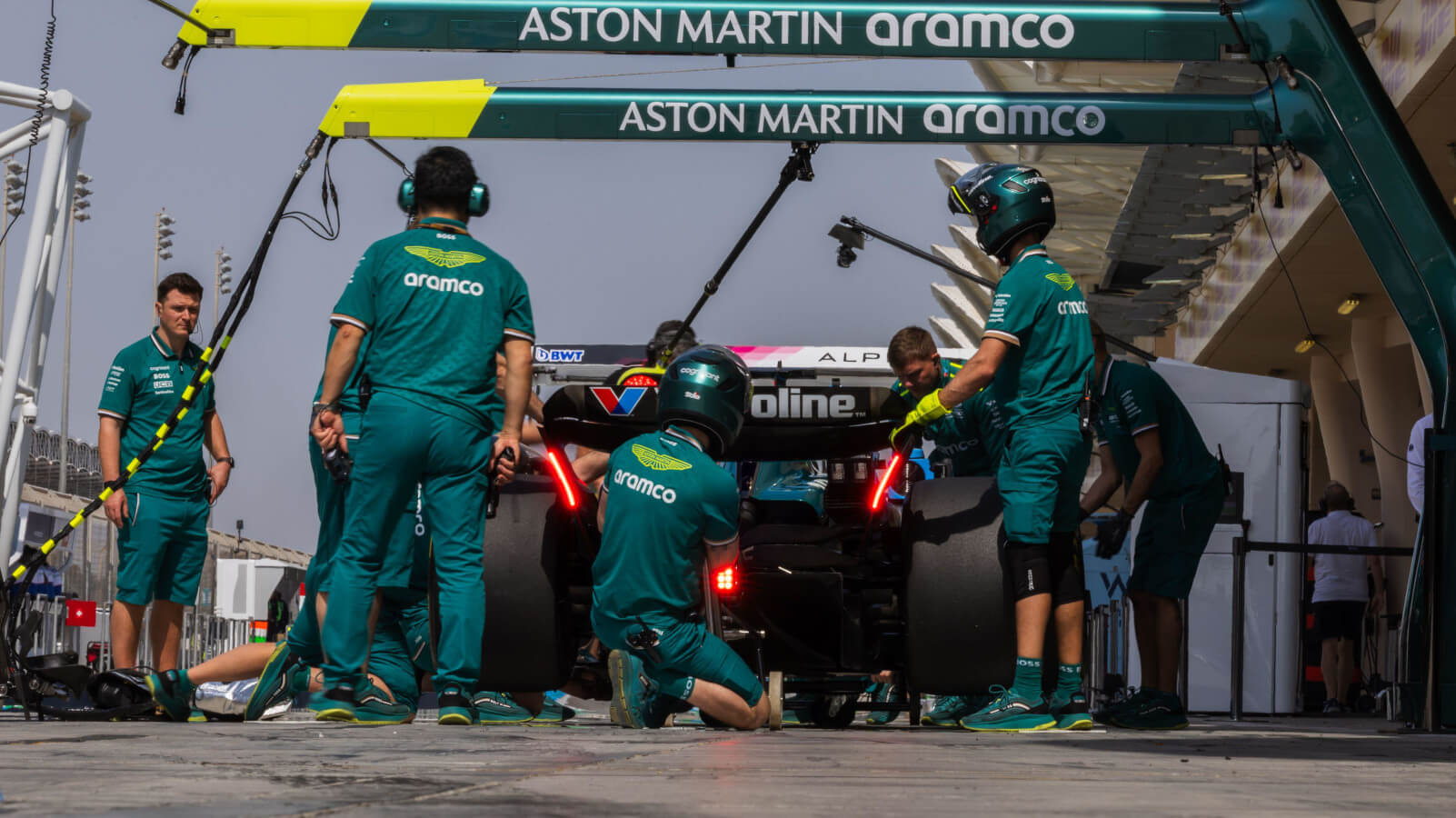
Could Aston Martin be a serious contender in the years to come?
Aston Martin is a team that has made several excellent decisions in the last few seasons.
In the first half of the previous campaign, they were the second-fastest team, but only a partial understanding of the car led to a drop in performance later in the year.
However, Aston Martin seems ready to attack the pinnacle of F1 once again. Let’s take a look at the technical evolution of their new car, which appears to hold plenty of promise.
New factory for Aston Martin
What will significantly differentiate this season for Aston Martin from the previous one is the fact that the AMR24 is the first car designed entirely in one factory.
Last season, the team had to split the sewing, aerodynamics, and testing of the car in completely different locations, which poses a significant challenge.
In a technically advanced sport like F1, having the entire car development under the same roof is a crucial factor and creates a better baseline for success
Major aerodynamic changes
Getting to know #AMR24. ?
Click below to dive into the details of our 2024 challenger.
— Aston Martin Aramco F1 Team (@AstonMartinF1) February 13, 2024
Let’s start with the front end of the car, where we can immediately notice a different nose.
Similar to Alpine, Aston Martin has decided to use larger curves and expand the dimensions of the nose to control the airflow around it more smoothly, thereby creating fewer losses or turbulent air, which can adversely affect the components behind.
On the front wing, we can see prominent endplate cutouts that will further aid in creating an outwash effect.
Sexy sidepods
However, the major changes on the new AMR24 are found in the middle of the car.
https://twitter.com/AMF1News/status/1760213938929619396
It appears that Aston Martin has continued and significantly improved the trend of sidepod inlets. The characteristic lower lip of the inlet is much longer, with its main role being to direct more air towards the undercut region beneath the sidepod.
Also, the overall geometry of the sidepod is different, with it being wider to push dirty air away from the car. Attention has also been given to creating space for the larger undercut area, which now plays a more significant role in the overall aerodynamic system.
This image by @XPBImages of the #AMR24 forward floor aero is mega!! So let’s break it down a bit from front to back. This is a great view of how the air is moving along the floor top deck and interacting with the undercut. pic.twitter.com/K76DHlYN8Q
— Dr Obbs (@dr_obbs) February 22, 2024
The real effect of such a design can be seen in the image above, where the flow-viz colour clearly shows all the airflow patterns. This colour is constantly used during testing and it can help a lot in verifying the computer simulations that the teams run in their factories.
Moreover, you can notice how a massive amount of air, moving under the front suspension system, ends up below the sidepods and then works together with the edge of the car’s floor.
This image clearly illustrates how crucial the lower lip of the inlet is and why so many teams insist on emphasising it.
https://twitter.com/AlbertFabrega/status/1760215045244399910/photo/1
The concept of last year’s so-called waterslide sidepods remains, with their start now moved backward, likely due to adjustments to the front part of the sidepods. Additionally, the sidepod is now made in one piece, addressing a mistake from last year when split lines between parts disrupted the flow.
The main role of the waterslide effect is to direct air towards the beam wing, leading to the efficient operation of this important aerodynamic component.
When you have an efficient beam wing, it is much easier to design a good diffuser that will guarantee high airflow speed beneath it and thus increase overall downforce and higher speeds the car can achieve in turns.
Head and shoulders
Also, the Aston Martin team has decided to implement another well-known feature in the form of “shoulders” behind the driver’s cockpit. Although not as pronounced as, for example, Red Bull’s, its main role is to direct turbulent air generated behind the cockpit, preventing it from interfering with clean and high-energy flows.
PlanetF1.com recommends
The six biggest F1 mysteries to start solving at the Bahrain Grand Prix
F1 predictions: The pecking order heading into first F1 2024 race
Push-rod rear suspension
https://twitter.com/ScarbsTech/status/1757353396401545679/photo/1
Another interesting detail is the push-rod rear suspension system, which will help create a bit more space for the diffuser. Since Aston Martin collaborates with the Mercedes team, it is very likely that they followed the path chosen by Mercedes engineers when constructing the new W15 car.
It will be fascinating to see how the AMR24 progresses compared to the previous season. During testing, the car seemed quite stable on the track and achieved good results.
However, since these are only tests, teams generally do not want to reveal their maximum potential, so the first few races of the season will be a true indicator of their performance.
Read next: Martin Brundle issues F1 warning amid ‘surprising’ FIA, Andretti rejection response